
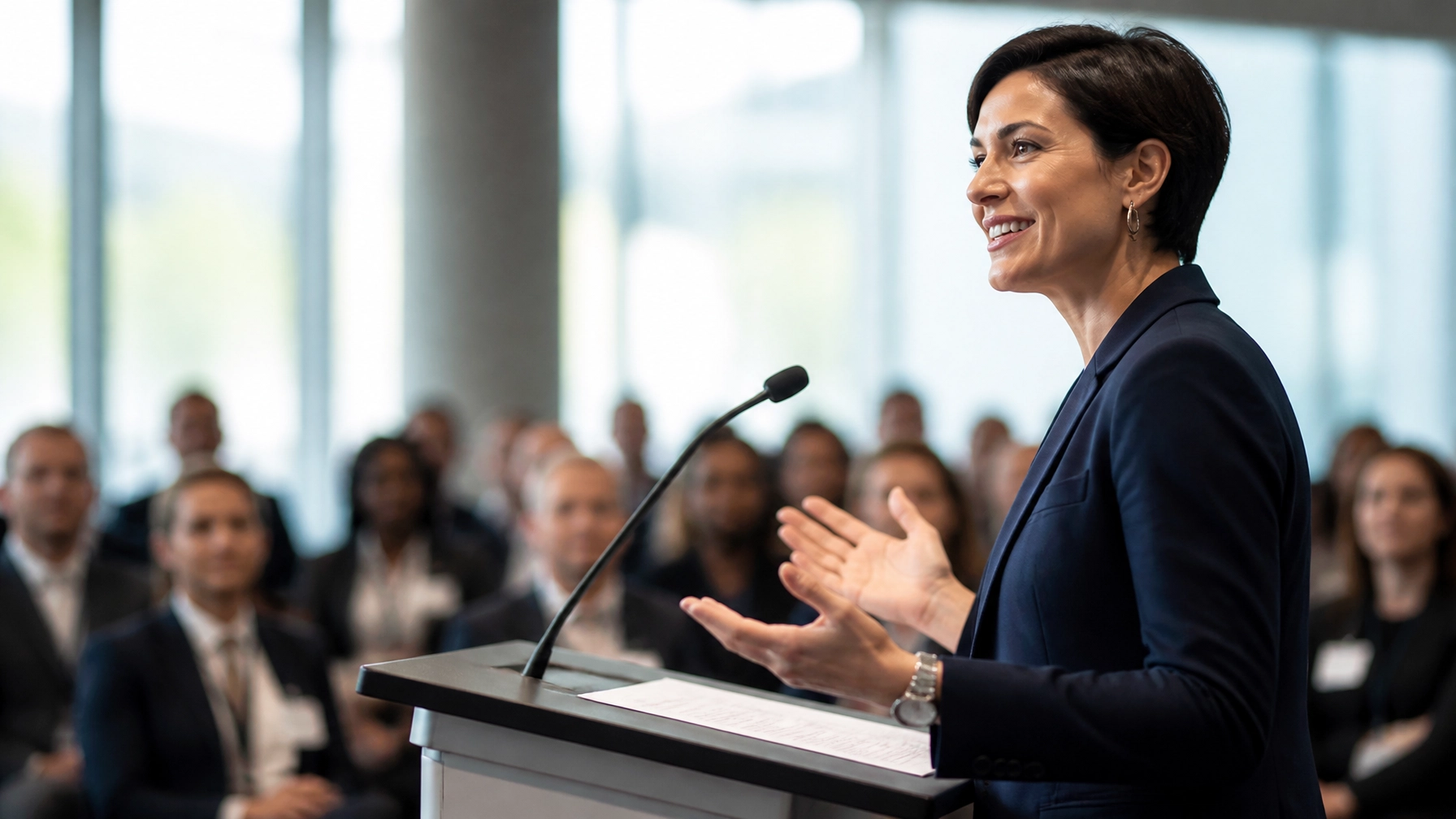
Have you ever stood in the middle of a high-stakes board meeting, looking at a room full of brilliant minds, and realized that despite everyone speaking the same language, no one was actually communicating?
It’s a common frustration in the corporate world. We have the best tools, the fastest Slack channels, and the most detailed project management software, yet the human connection remains frayed. We speak in "Tech," "Marketing," and "Executive," and often, we lose the heart of the message in the process.
For years, I worked in the high-pressure world of Information Technology. I remember a specific project early in my career: a massive systems integration that had everyone on edge. The developers were frustrated because the business goals felt arbitrary; the executives were furious because the technical delays felt like a lack of effort. I was caught in the middle, trying to bridge a gap that felt like a canyon.
I realized then that "speaking the language" isn't just about vocabulary. It’s about the cognitive agility to see the world through two different lenses simultaneously. This is exactly what a bilingual motivational speaker brings to your organization. It isn’t just about translation; it’s about transformation.
The Superpower of Cognitive Empathy
When someone operates in two or more languages, their brain develops a unique kind of flexibility. Research shows that bilingual individuals often have a higher capacity for perspective-taking. In the business world, we call this Cognitive Empathy.

Think about the last time you had a misunderstanding with a colleague. Was it because they were wrong, or was it because you were both looking at the same problem from different cultural or professional frameworks? A bilingual speaker has spent a lifetime navigating these shifts. They don't just tell your team to "be more inclusive": they model the neurological ability to jump between different ways of thinking.
When I speak to teams, I often think back to those IT war rooms. I wasn't just translating code into business requirements; I was translating fears into solutions. The developer feared a system crash; the CEO feared a loss of market share. By speaking both "languages," I could create a shared emotional ground. This is the first reason why a bilingual speaker changes the game: they help your team build the muscle of empathy by showing them how to bridge seemingly incompatible worlds.
The "Rationality" Factor in Decision Making
There is a fascinating psychological phenomenon: people tend to make more rational, less emotionally biased decisions when thinking in a second language. This is often referred to as the "Foreign Language Effect."
In leadership, our biggest mistakes often come from knee-jerk emotional reactions. We get defensive. We get scared. We let ego drive the bus. Because bilingual speakers are constantly engaging the more analytical, deliberate parts of their brain to manage two linguistic systems, they bring a sense of groundedness to their message.
I challenge you to look at your current communication strategies. Are they built on impulse, or are they built on the kind of deliberate, measured logic that comes from a multilingual perspective? When a speaker brings this energy to your stage, it encourages your leaders to slow down, think more deeply, and act with greater intention. It moves the needle from "reactionary" to "visionary."
Creating a "Third Language" for Your Team
One of the greatest struggles in modern business is the "silo" effect. Each department has its own jargon, its own growth metrics, and its own culture. This creates invisible barriers that hinder innovation.

A bilingual motivational speaker acts as a master architect of a "Third Language." This isn't a literal language, but a shared corporate vocabulary that blends technical expertise with human learning.
Imagine two different paths to success. Path A is rigid, monolingual, and focused solely on the "how." Path B is fluid, adaptable, and focused on the "why." Which one do you think survives a market pivot? Which one fosters a 21st-century business culture?
By utilizing analogies from fields as diverse as aviation or medical school, a great speaker shows your team that their differences are not obstacles: they are the very materials needed to build something stronger. They teach your team how to stop "protecting their turf" and start "expanding the map."
Why You Need This Perspective Now
The world isn't getting smaller; it’s getting more interconnected. If your team is only hearing one perspective, in one "dialect" of business, you are leaving talent and money on the table. You are missing the nuances that turn a "good" company into a "great" one.
Bottom line: If you want to connect with a diverse workforce, you can’t just use a louder megaphone. You need a better bridge.
What to look for in a speaker to transform your team:
- Authentic Storytelling: Can they share a time they failed because of a communication gap? Vulnerability is the key to trust.
- Tech-Business Fluency: Can they speak to the "hard" skills of your industry while touching the "soft" hearts of your people?
- Actionable Pragmatism: Inspiration is a spark, but your team needs a manual. Look for a speaker who provides clear, numbered takeaways.
- High-Energy Engagement: Does their presence fill the room? A speaker should make your team feel like they can climb a mountain by the time the session is over.
Don’t Let Your Message Get Lost!
I’ve seen too many brilliant companies stumble because they couldn't get their people on the same page. I’ve seen projects fail not because of a lack of code, but because of a lack of collaboration.
I challenge you today: Look at your team. Do they feel heard? Do they feel like they have the tools to connect with one another across the many "languages" of your organization?
If the answer is anything less than a resounding "Yes," it is time for a change. Don't wait for another communication breakdown to realize the value of a bilingual perspective. Bring in a speaker who doesn't just talk at your people, but speaks with them.

Your potential is massive. Your team’s potential is even bigger. But you have to unlock it by speaking the language of connection, resilience, and vision.
Let’s stop talking and start connecting. The future of your business depends on it.
Go out there and lead with everything you’ve got!